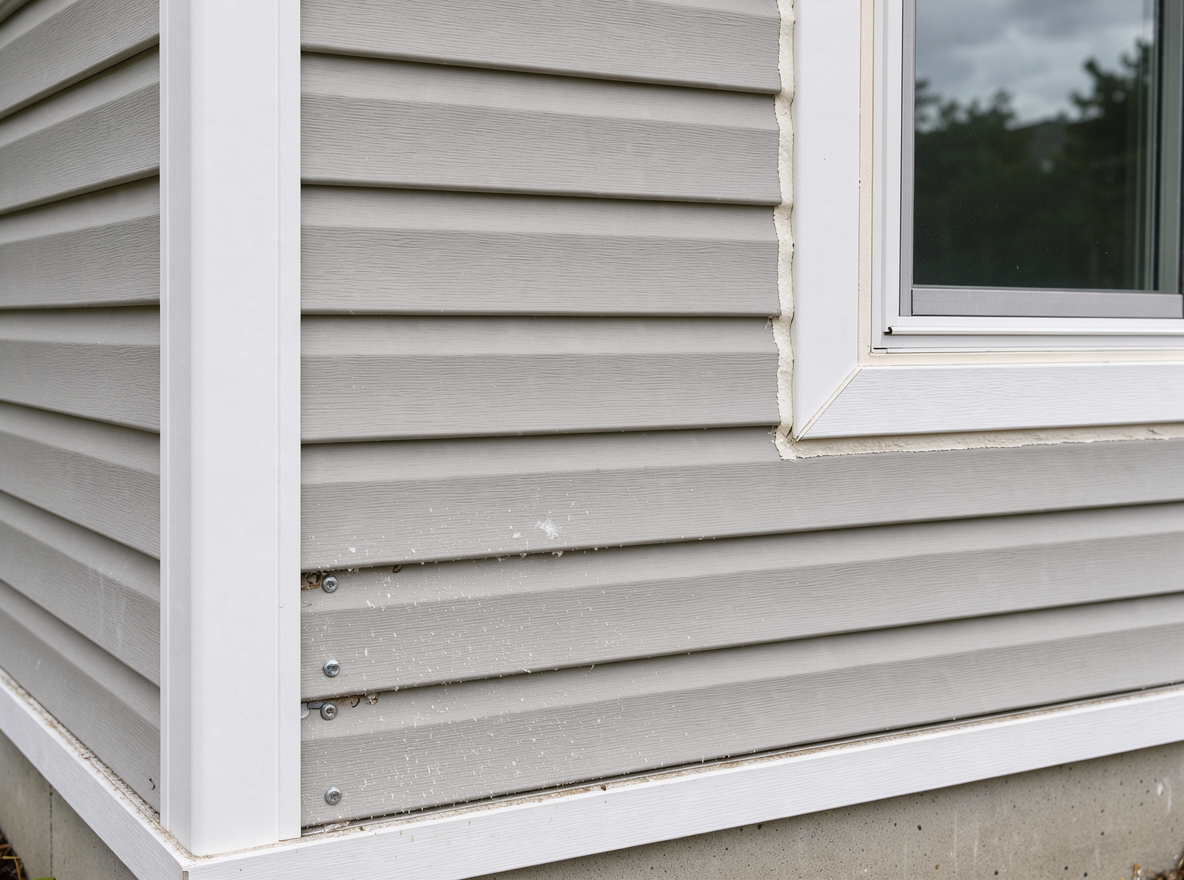
Vinyl is the most common siding on Hampton Roads homes. You see it on ranch houses in Kempsville and Bayside, on newer two-story builds in Princess Anne, and on cottages near the Oceanfront and Sandbridge. It doesn't rust or rot, it never needs paint, and it sheds the salt spray that eats bare metal and wood near the water. The panel itself is only part of the system, though. Vinyl is a rain screen, not a waterproof skin. Wind-driven rain gets behind it, and what really protects the house is the water-resistive barrier, properly lapped house wrap, and flashing at windows, doors and rooflines. A local siding pro will look at all of that, not just the color and profile you want.
Coastal conditions change how vinyl should be chosen and hung. Nor'easters and the edges of tropical storms hit the shoreline from Cape Henry down to Sandbridge with sustained gusts. In those spots, panels with a heavier gauge, a deeper nail hem and a higher wind-load rating are worth asking about. Vinyl also expands and contracts a lot with temperature. Nails should be centered in the slots and left slightly loose so the panels can float. Panels nailed tight buckle on hot summer afternoons. Panels nailed too loose or too far apart are the ones that peel off in a storm. Long, humid summers matter too. Mildew and algae grow on north-facing walls and under tree cover in neighborhoods like Great Neck and Thoroughgood, so ventilation and drainage behind the siding count for more here than in drier climates.
Signs that your vinyl is failing are usually easy to spot. Look for panels that are cracked, faded, chalky, rippled or wavy, or that have pulled out of the J-channel around windows. Soft spots when you press on the wall, peeling interior paint, or musty smells in rooms along an exterior wall can mean water is getting past the siding and rotting the sheathing. Older homes sometimes have vinyl installed right over original wood or aluminum siding with little or no wrap underneath. A contractor may recommend stripping to the sheathing so any rot can be found and repaired before new panels go on.
On permits, rules differ across Virginia Beach, Norfolk, Chesapeake, Suffolk, Portsmouth, Hampton and Newport News. Some full re-siding or sheathing work needs a building permit, and homes in historic districts or HOA communities may have their own requirements. Check with your city's permit office, and ask any contractor you're considering how they handle permits and inspections. That way the work is documented correctly when you sell or file an insurance claim.
Vinyl vs. Fiber Cement Near the Coast
Vinyl usually costs less up front and needs almost no upkeep. Fiber cement is heavier and more impact-resistant, and it holds paint well, but it has to be repainted periodically and needs careful sealing at cut edges in humid air. Within a few blocks of the ocean, both can do well if they're installed correctly. The bigger factors are budget, how long you plan to stay, and how much maintenance you're willing to do. A contractor can walk you through the tradeoffs for your house.
Seasonal and Maintenance Tips
- Rinse siding gently with a garden hose once or twice a year to remove salt film and pollen. Never aim a pressure washer upward under the laps.
- After a storm, walk the house and look for panels that are loose, missing or pulled out of their channels.
- Keep mulch and soil several inches below the bottom course so moisture doesn't wick up.
- Keep grills well away from the walls, since heat can warp vinyl.
Technician insight
In Virginia Beach, the thing that catches most people out with vinyl siding is how many 1970s and '80s homes in Kempsville and Bayside have little or no real house wrap behind the old panels. Homeowners ask for a straight panel swap, then the tear-off reveals soft sheathing under the windows where storm-driven rain has been getting in for years. Set aside some budget for sheathing repair, and ask every contractor how they price it before work starts.
Panels Lost in a Nor'easter Near the Oceanfront
A homeowner near the Oceanfront lost several courses of vinyl off the windward side of the house during a nor'easter. The contractor found the original panels had been nailed tight and spaced too far apart, and the wrap behind them was torn and stapled loosely. The contractor replaced that wall with fresh wrap, properly lapped flashing and correctly nailed panels in a close color match. The rest of the house was re-fastened where needed, and the new section stayed put through the following storm season.
Vinyl Siding Services We Offer
✓Vinyl Siding Installation
New vinyl siding on a home that is being built, added onto, or re-sided down to the sheathing, including wrap, flashing and trim.
✓Vinyl Siding Replacement
Removing worn, faded or damaged vinyl, aluminum or wood siding and replacing it with new vinyl panels.
✓Insulated Vinyl Siding
Vinyl panels with a contoured foam backing that adds rigidity against wind and some added thermal resistance.
✓Vinyl Panel Color Matching
Finding a matching or close-matching panel for spot repairs. This can be hard on older or sun-faded siding.
✓Wind and Storm Damage Repair
Re-securing or replacing panels that were loosened, cracked or torn off by coastal storms and gusty nor'easters.
✓House Wrap and Moisture Barrier
Installing or correcting the water-resistive barrier and flashing behind the siding, which is the layer that actually keeps water out of the walls.
✓Trim, Soffit and Fascia During Installation
Vinyl or aluminum soffit, fascia wrap and trim installed with the siding for a finished, ventilated roofline.
✓Rotted Sheathing and Water Damage Repair
Replacing soft or rotted wall sheathing found during siding removal, before new panels go on.
Vinyl Siding Cost in Virginia
| Service | Typical Range | What Affects It |
|---|---|---|
| Full house vinyl siding replacement | $4–$8 per sq ft installed (typical range) | Panel grade, tear-off, wrap and trim drive the cost. Final pricing comes from the contractor's estimate. |
| Insulated vinyl siding | $6–$11 per sq ft installed (typical range) | Foam-backed panels cost more for materials. Varies by contractor and product line. |
| Vinyl siding repair (a few panels) | $250–$800 (typical range) | Color matching, access height and any hidden water damage affect the price. Confirm with the contractor's estimate. |
| Soffit and fascia with siding job | $8–$20 per linear ft (typical range) | Depends on material and on whether rotted fascia board needs replacing first. Final pricing comes from the contractor. |
Ranges are typical for Virginia and confirmed with an exact written quote before any work starts.
How it works
- 1
Tell Us About Your Project
Share your city, the type of work (repair, partial or full replacement, or new installation), and anything you've noticed, such as storm damage, warping or leaks.
- 2
Get Matched With Local Contractors
Your request goes to independent siding contractors who serve your part of Hampton Roads.
- 3
On-Site Assessment
A contractor visits, measures the walls, checks the condition of the sheathing and wrap, and talks through panel options and colors with you.
- 4
Compare Written Estimates
Review each contractor's scope, materials, timeline and price side by side. Ask how they handle permits and any hidden rot they find.
- 5
Hire Directly
You choose the contractor and agree on terms directly with them. Before the final payment, inspect the finished work for proper nailing, clean J-channel joints and sealed penetrations.
Pricing
Vinyl siding cost depends on wall square footage, panel grade and thickness, whether old siding has to be removed, how much sheathing repair is needed, and trim complexity. Two-story walls, dormers and lots of windows add labor. The ranges below are typical market figures only. Your actual price comes from each contractor's written estimate.