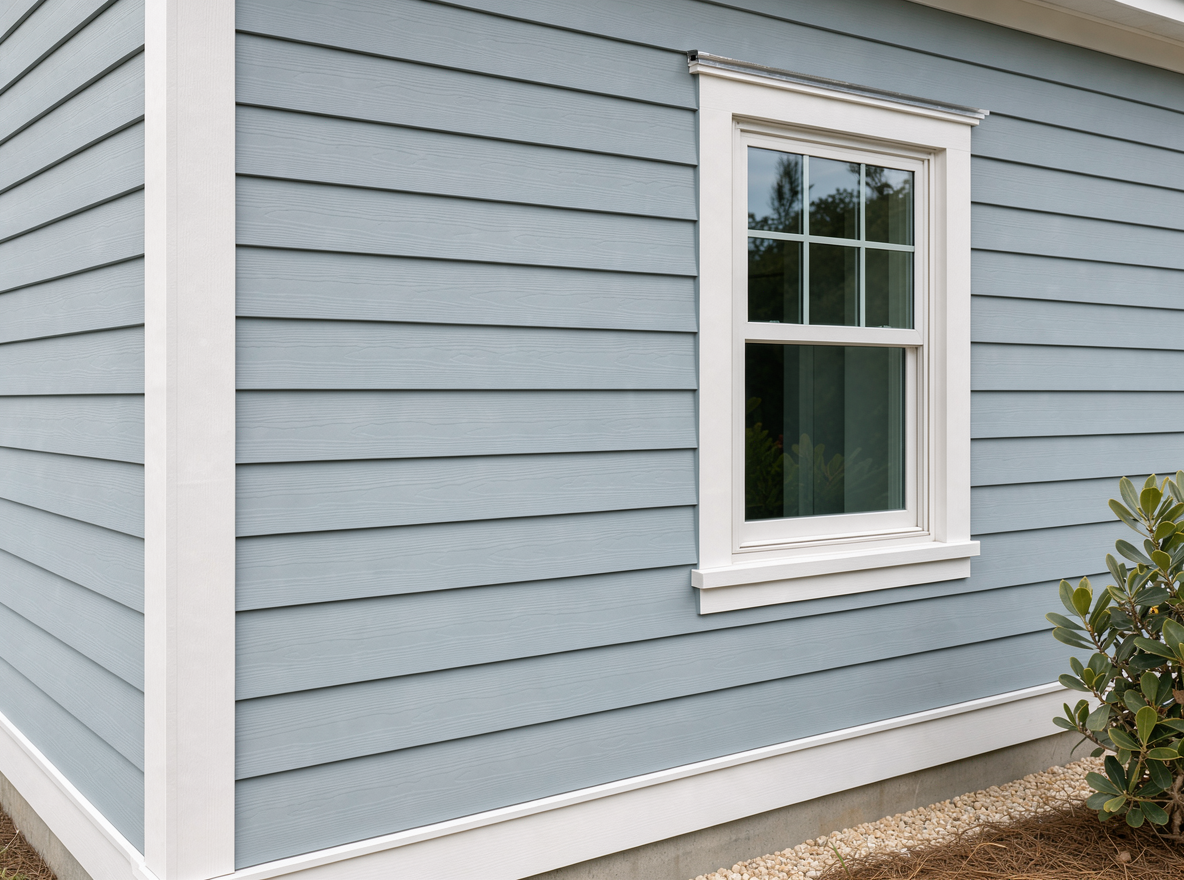
Fiber cement siding is a blend of Portland cement, sand and cellulose fibers pressed into lap planks, shingles, panels and trim. Homeowners from Kempsville to Great Neck choose it because it won't melt, won't feed termites, holds paint far longer than wood and has a solid, textured look that vinyl can't match. It's also heavy, brittle until fastened, and unforgiving of sloppy detailing. A local siding pro has to handle it with care, cut it with dust-controlled tools to limit silica exposure, and fasten it to the manufacturer's nailing schedule. Most products come either factory-primed for field painting or prefinished in factory color. That choice affects both the upfront cost and how soon the house needs repainting.
Hampton Roads is a tough place for any exterior. Salt-laden air drifts well inland from the Oceanfront and Sandbridge, and it corrodes cheap fasteners, flashing and nail heads. Rust streaks then bleed down the face of the boards. A careful contractor near the water specifies stainless steel or hot-dipped galvanized fasteners and corrosion-resistant flashing. Nor'easters and the tail ends of tropical storms push wind-driven rain sideways. That makes butt-joint flashing, kick-out flashing at roof-wall intersections and properly sealed window heads critical. Long, humid summers keep wall cavities damp if water gets behind the siding. Fiber cement itself doesn't rot, but the sheathing and framing behind it can.
That's why the layer you never see matters most. A good installation starts with a continuous weather-resistive barrier, usually house wrap or a drainable wrap, lapped shingle-style so water runs down and out. Windows and doors get flashed in the right sequence. The contractor also leaves the manufacturer's required clearances above roofs, decks, patios and finished grade, because cut edges that sit in standing water or touch mulch will wick moisture and fail early. Signs of trouble on an existing fiber cement house include:
- swollen or delaminating bottom edges
- cracked boards around nail heads
- open or unflashed butt joints
- rust streaking
- peeling paint concentrated at the lower courses
- soft sheathing found when a board is pulled
Before any work starts, check with your city's permit office: Virginia Beach, Norfolk, Chesapeake, Suffolk, Portsmouth, Hampton or Newport News. Permit requirements for re-siding and sheathing repair vary, and some neighborhoods have HOA or historic review rules on color and profile. Ask the contractor who pulls the permit and whether the estimate includes inspection. It also pays to ask how they handle surprises. Older homes in Thoroughgood and Bayside often hide rotted sheathing or old wood siding under existing layers, and a written estimate should explain how that would be priced if it turns up.
Fiber Cement vs Vinyl in Hampton Roads
Vinyl costs less upfront and never needs paint. But it can loosen or blow off in high wind, it can warp near reflective windows or grills, and it gives the house a lighter, hollower feel. Fiber cement costs more and needs periodic repainting unless you buy it prefinished. In return, it resists impact, fire and pests, and it holds a crisp painted finish. For homes near the Oceanfront or on exposed lots, the deciding factor is often how well each system is detailed for wind and salt, not just the material itself. Ask any contractor you're connected with to quote both, so you can compare the full scope rather than just a per-square-foot number.
Seasonal Timing and Care Tips
- Best timing: Spring and fall are usually the easiest seasons for fiber cement work here. Summer brings afternoon storms and heat that can affect paint and caulk curing, and late summer into fall overlaps hurricane season.
- Rinse the walls: Homes close to the water benefit from a gentle freshwater rinse a couple of times a year to clear salt film.
- Watch the seals: Inspect caulked joints at windows and trim annually.
- Mind the ground line: Keep mulch, soil and sprinkler spray away from the bottom course of siding.
Technician insight
In Virginia Beach, the thing that catches most people out with fiber cement siding is that the failures almost never start with the board itself. They start at the bottom edges and the joints. I see houses near Lynnhaven and the Oceanfront where boards were run tight to a patio, deck or roof line, or butt joints were left unflashed, and years of humid air and wind-driven rain swelled the cut edges and soaked the sheathing behind. Ask the contractor specifically about clearances, joint flashing and coastal-grade fasteners. Those details matter more here than the brand name on the board.
Swollen Bottom Courses on a Bayside Ranch
A homeowner noticed peeling paint and soft, swollen fiber cement along the lowest rows of siding next to a back patio. The contractor found the boards had been installed tight to the concrete with no clearance, and that the patio sloped toward the house, so the cut edges sat in water after every storm. The contractor removed the damaged courses, replaced a strip of soft sheathing, corrected the weather barrier and reinstalled new boards with proper clearance and sealed cut edges. The new siding stayed dry through the following storm season.
Fiber Cement Siding Services We Offer
✓Fiber Cement Installation
New fiber cement lap, shingle or panel siding installed over a properly lapped weather barrier, with flashing and clearances detailed for coastal conditions.
✓Fiber Cement Replacement
Removal of failing siding, whether wood, aluminum, vinyl or older fiber cement, and replacement with new fiber cement, including sheathing inspection once the walls are open.
✓Fiber Cement vs Vinyl Consultation
A side-by-side look at cost, durability, wind performance and upkeep, so you can decide which material fits your home and budget.
✓Fiber Cement Trim and Accessories
Corner boards, window and door casings, frieze boards and band boards in fiber cement or compatible trim, flashed and finished to match the siding.
✓House Wrap and Moisture Barrier
Installation or correction of the weather-resistive barrier and window flashing behind the siding. This is the layer that keeps humid-climate moisture out of the wall.
✓Rotted Sheathing and Water Damage Repair
Repair of soft or rotted sheathing and framing found behind failed siding, before new boards go back on.
✓Storm-Damaged Siding Replacement
Replacement of cracked, broken or blown-off fiber cement boards after a nor'easter or tropical storm, matched as closely as available products allow.
Fiber Cement Siding Cost in Virginia
| Service | Typical Range | What Affects It |
|---|---|---|
| Fiber cement siding installed (per sq ft of wall) | $9 – $16 per sq ft | Typical market range. Varies with profile, prefinished versus primed boards, stories and access. Final pricing comes from the contractor's estimate. |
| Full house re-side, typical single-family home | $18,000 – $40,000+ | Depends on wall area, tear-off, trim scope and sheathing repairs. Ranges vary widely by contractor and home. |
| Board or section repair (a few boards) | $400 – $1,500 | Affected by board availability, paint matching, height and any flashing correction. Get a contractor's estimate. |
| Sheathing replacement behind siding | $3 – $8 per sq ft | Usually unknown until the walls are opened. Ask how the contractor prices hidden damage. |
| Fiber cement trim package | $2,000 – $7,000 | Varies with the number of windows and doors, frieze and band boards, and the material chosen. Final pricing comes from the contractor's estimate. |
Ranges are typical for Virginia and confirmed with an exact written quote before any work starts.
How it works
- 1
Tell Us About Your Home
Share your city, your home's approximate size, the current siding and what you're hoping to do, whether that's a full re-side, partial replacement or repair.
- 2
Get Connected With a Local Siding Pro
We connect you with an independent siding contractor who works in your part of Hampton Roads. Hampton Roads Siding Pros is a referral service, not a contractor, and does not perform the work.
- 3
On-Site Assessment
The contractor measures the walls, checks for soft sheathing, flashing problems and moisture damage, and talks through product, profile and finish options with you.
- 4
Written Estimate
You receive the contractor's own estimate covering scope, materials, tear-off, trim, permit handling and how hidden damage would be priced. Compare it carefully and ask questions.
- 5
Your Decision
There's no obligation. If you go ahead, you contract directly with the independent contractor, so verify their credentials, insurance and permit responsibilities yourself before signing.
Pricing
Fiber cement generally costs more than vinyl, both in materials and in labor, because the boards are heavy, must be cut with dust control and need careful detailing. Several things move the price: wall area, the number of stories, tear-off, trim complexity, prefinished versus field-painted boards, and how much rotted sheathing turns up. The figures below are typical market ranges only. Prices vary by contractor, and only a contractor's written estimate gives you a real number.