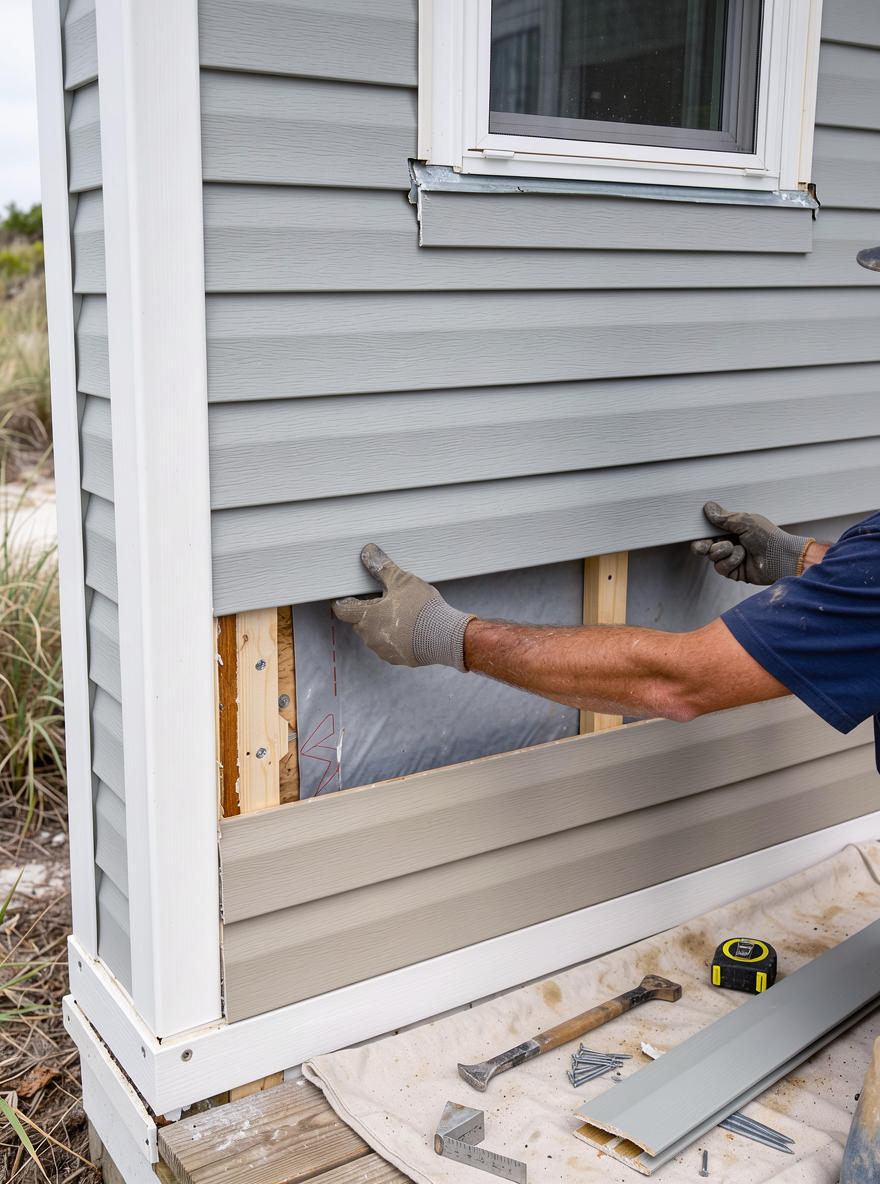
Siding replacement in Hampton Roads is shaped by the coast. Homes near the Oceanfront, Sandbridge and Great Neck take constant salt air, and nor'easters and late-summer tropical systems push wind-driven rain sideways into laps and seams. Inland neighborhoods like Kempsville, Princess Anne and much of Chesapeake are a little more sheltered, but long humid summers still keep wall cavities damp. That makes material choice and installation detail matter as much as color. Vinyl stays popular because it is affordable and will not rust or need paint. Fiber cement handles impact and heat well and holds paint, though it is heavier and costs more to install. Many older homes in Thoroughgood, Lynnhaven and older parts of Norfolk still have original wood or aluminum siding. Those homes are often the first candidates for full replacement.
Look past fading when you judge your siding. These signs usually mean replacement, not repair: panels that are warped, buckled or cracked; siding that sounds hollow or feels soft when pressed; peeling paint inside near exterior walls; and mildew that returns in the same spots. Aluminum siding that is chalky or pitted is another sign. So is wood with rot along the bottom courses and around windows. In coastal air, corroded fasteners and failed flashing at windows and doors cause many hidden leaks. Once the old siding comes off, a local siding pro will check the sheathing underneath. Rotted plywood or OSB is common on homes that leaked for years. It should be replaced before new cladding goes on, so expect the estimate to explain how sheathing repairs are priced.
The moisture barrier behind the siding does most of the work of keeping water out of your walls. Siding sheds most rain, but in a humid, wind-exposed climate some water always gets behind it. A properly lapped house wrap or weather-resistive barrier, taped seams, and correctly installed window and door flashing let that water drain out instead of soaking the framing. Some contractors also suggest a rainscreen gap or furring behind fiber cement on exposed elevations. Ask each contractor what barrier and flashing method they plan to use. Also ask how they will fasten panels for high-wind exposure, since nail type, spacing and corrosion resistance matter near salt water. Stainless or properly coated fasteners make a real difference within a few miles of the bay or ocean.
Permits and rules vary by city. Virginia Beach, Norfolk, Chesapeake, Suffolk, Portsmouth, Hampton and Newport News each set their own requirements for exterior cladding work. Before work starts, check with your city's permit office or confirm that your contractor will pull any permit required. If you live in a neighborhood with an HOA or architectural review board, get your material and color approved first. Some subdivisions have firm rules about profiles and colors. Homes in flood-prone areas may face added considerations for materials near grade. Your city or a qualified contractor can tell you what applies to your property.
Vinyl vs. Fiber Cement for a Coastal Home
Vinyl costs less up front, installs faster and never needs paint. Lower-grade panels can warp in strong summer sun or crack from impact, and they can loosen in high wind if they are not fastened correctly. Fiber cement resists impact, heat and pests, gives a crisper wood-like look, and suits historic or upscale streets. It costs more to buy and install, needs to be painted periodically, and must be cut and handled carefully. Insulated vinyl falls between the two, adding rigidity and some thermal benefit. Ask each contractor to price comparable options side by side so you can weigh the cost of the material over the years you plan to own the home.
Seasonal Timing Tips
Spring and fall usually offer the most comfortable working weather in Hampton Roads. They also tend to be when contractor calendars fill fastest. Summer work is common, but afternoon storms can interrupt tear-off days. Many homeowners like to have the walls closed and sealed before the peak of hurricane season. If your siding is visibly failing, start getting estimates early rather than waiting for a storm to make the decision for you.
Technician insight
In Virginia Beach, the thing that catches most people out with Siding Replacement is what's under the old siding, not the siding itself. Many homes from the '60s through '80s in areas like Kempsville and Lynnhaven had little or no house wrap, and years of wind-driven rain around windows have softened the sheathing. Homeowners compare quotes on panel price alone, then get surprised by rot repair. I always tell people to ask each contractor exactly how they handle and price sheathing and flashing before signing.
Aluminum Siding Swap Uncovers Window Leaks Near Great Neck
A homeowner wanted dented, chalky aluminum siding replaced with vinyl, and assumed the leaks were cosmetic. After tear-off, the contractor found soft sheathing below several windows where flashing had never been installed. The contractor replaced the damaged sheathing, added a taped weather barrier and properly lapped window flashing, then installed the new siding with corrosion-resistant fasteners. The interior staining near those windows did not return through the following storm season.
Siding Replacement Services We Offer
✓Full House Siding Replacement
Complete tear-off of existing siding, inspection and repair of sheathing, new moisture barrier, and new cladding on every elevation.
✓Partial Siding Replacement
Replacing damaged walls or sections while matching profile and color as closely as available materials allow.
✓Aluminum Siding Replacement
Removing aging, chalky or dented aluminum siding common on older Hampton Roads homes and replacing it with vinyl or fiber cement.
✓Wood Siding Replacement
Replacing rotted or failing wood lap or shingle siding, often with a lower-maintenance material that keeps a similar look.
✓Storm-Damaged Siding Replacement
Replacing siding torn loose or cracked by nor'easters, tropical storms or flying debris, with documentation you can share with your insurer.
✓Vinyl Siding Replacement
New vinyl or insulated vinyl panels installed over a fresh weather barrier with fastening suited to wind exposure.
✓Fiber Cement Replacement
Durable, paintable fiber cement lap, panel or shake siding installed with corrosion-resistant fasteners and proper clearances.
✓Siding and Window Replacement
Coordinating new windows with new siding so flashing and trim are integrated correctly in a single project.
Siding Replacement Cost in Virginia
| Service | Typical Range | What Affects It |
|---|---|---|
| Standard vinyl siding replacement (installed) | $4–$8 per sq ft | Typical market range that varies by contractor. Panel thickness, stories, tear-off and trim affect cost. Final pricing comes from the contractor's estimate. |
| Insulated vinyl siding replacement | $6–$11 per sq ft | Typical market range. Foam backing and product line raise cost. Get a written estimate for actual pricing. |
| Fiber cement siding replacement | $8–$15 per sq ft | Typical market range. Painting, profile, trim and labor intensity vary widely. Final pricing comes from the contractor's estimate. |
| Sheathing repair after tear-off | $3–$7 per sq ft of replaced sheathing | Typical market range. The amount of rot is often unknown until the siding is removed. Ask how it will be priced in the estimate. |
Ranges are typical for Virginia and confirmed with an exact written quote before any work starts.
How it works
- 1
Tell Us About Your Home
Share your city, the type and age of your current siding, any visible damage, and what materials you are considering.
- 2
Get Matched With Local Contractors
We connect you with independent siding contractors who serve your part of Hampton Roads. You decide whom to talk to.
- 3
On-Site Inspection and Estimate
The contractor measures your walls, checks for soft sheathing and flashing problems, and gives you a written estimate with material options.
- 4
Compare and Choose
Review the scope, barrier method, trim details, cleanup and payment terms. Verify any credentials directly with the contractor before you sign.
Pricing
Siding replacement is usually priced per square (100 sq ft) of wall area. Material, home height, the amount of trim and the sheathing repairs found after tear-off all move the total. Fiber cement typically costs noticeably more than standard vinyl. The ranges below are typical market figures only. Your actual price comes from each contractor's written estimate.