2026-10-03 ·
Best Siding for Coastal Virginia: Wind, Salt Air and Humidity
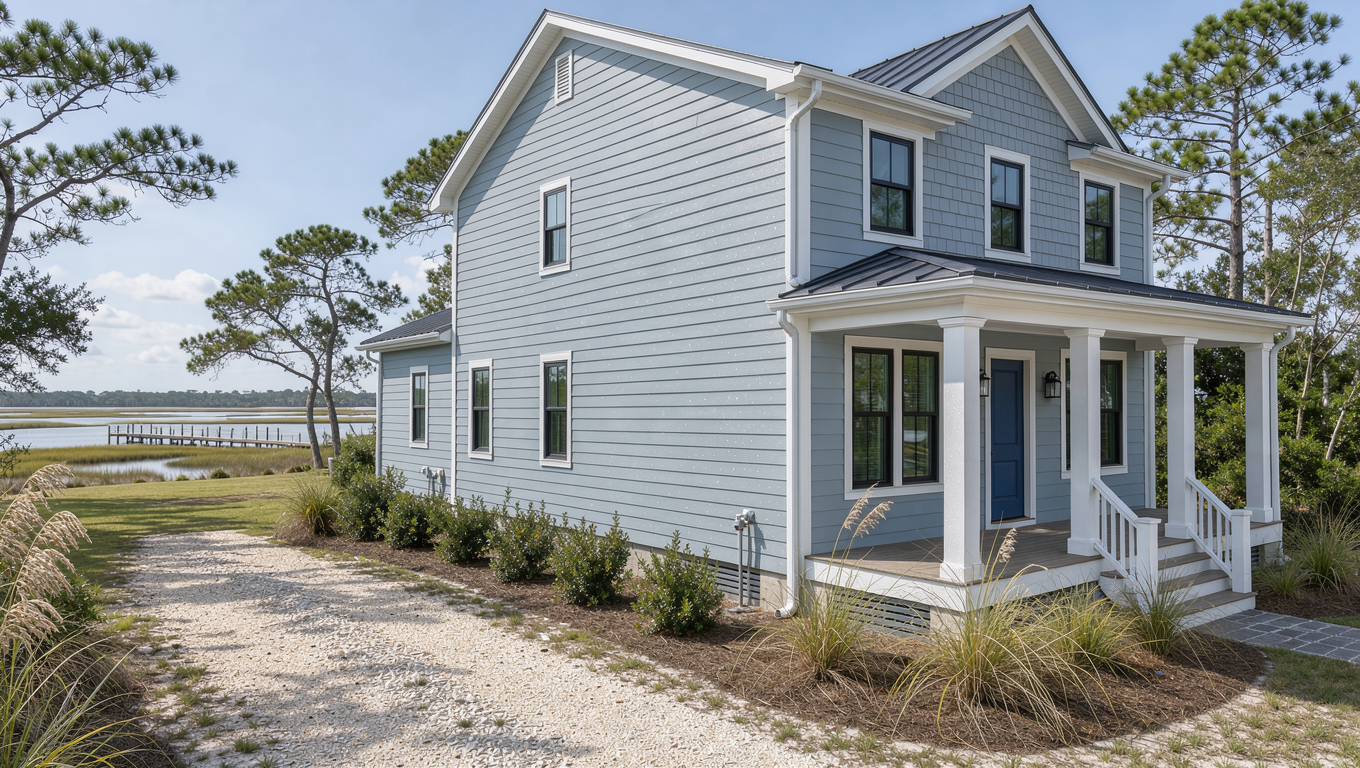
For most homes in coastal Virginia, the best siding is fiber cement or a premium, thicker vinyl rated for high winds. Fiber cement resists salt, rot, insects and fire. Quality vinyl costs less and handles humidity without needing paint. Engineered wood can work farther inland, and natural cedar is usually the hardest to keep up near the water. The right pick depends on how close you live to the ocean or the bay, how much wind your street gets, and how much maintenance you're willing to do. A house on the Oceanfront or in Sandbridge has different needs than one in Kempsville or inland Chesapeake.
Why Coastal Virginia Is Hard on Siding
Hampton Roads has a humid subtropical climate shaped by the Atlantic. Summers are long and muggy, winters are mild, and moisture rarely gets a break. That steady humidity feeds mildew and algae on north-facing walls and shaded siding, especially in older wooded neighborhoods like Thoroughgood and Great Neck. Near the shoreline, salt spray settles on every surface. Over time it pits metal fasteners, eats through thin coatings and wears down finishes. Then there's wind. Nor'easters and the edges of tropical storms push hard on wall cladding, and wind-driven rain gets forced behind any panel that isn't properly lapped and flashed. Good siding here has to handle all 3 problems at once: holding moisture off the wall, standing up to corrosion, and staying attached in strong gusts. A material that does well in a dry inland climate can fail early in Bayside or Lynnhaven if any of these is ignored.
Fiber Cement: The Durability Leader
Fiber cement is made from cement, sand and cellulose fibers. It's often the top choice for homes close to salt water. It doesn't rot, won't attract termites, and doesn't soften or warp in heat, which matters on sun-baked south and west walls. Its weight and stiffness help it stay put in high winds when it's nailed to the manufacturer's coastal specifications. Many brands offer factory-applied finishes made to resist fading and salt exposure. There are trade-offs:
- Higher cost: typical national installed ranges run roughly $6–$14 per square foot, depending on the home, trim complexity and contractor.
- Paint upkeep: factory finishes often last 10–15 years before you'll want to repaint, though this varies by exposure.
- Installation matters: joints, flashing and stainless or hot-dipped galvanized fasteners are critical near the ocean.
If you're considering it, our overview of fiber cement siding explains what a proper install includes.
Vinyl Siding: Budget-Friendly and Moisture-Tolerant
Vinyl siding can't rot, never needs paint, and doesn't care about humidity. That makes it a practical choice across Norfolk, Chesapeake and much of Virginia Beach. On the coast, though, the details matter. Thin, builder-grade panels can crack, rattle or blow off in a strong storm. Look for:
- Thicker panels (often about 0.044–0.050 inch) instead of the thinnest grades
- High wind-load ratings listed on the product's documentation
- Hurricane-style nailing hems and correct nail spacing
- Insulated or foam-backed options for extra rigidity
Typical national installed ranges for vinyl fall around $4–$9 per square foot. Premium lines and insulated panels sit at the higher end. Vinyl can still grow mildew on shaded walls, but it usually cleans off with a gentle wash. See our vinyl siding page for how styles and grades compare.